
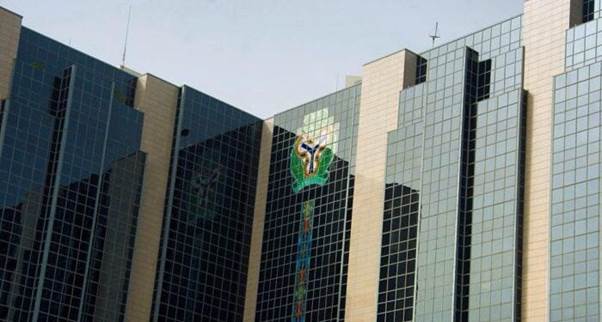

File: CBN Building
The Manufacturers Association of Nigeria has urged the Central Bank of Nigeria to further reduce interest rates to ease the rising cost of borrowing, which continues to stifle production and erode competitiveness in the manufacturing sector.
In its reaction to the outcome of the Monetary Policy Committee meeting held on November 24 and 25, MAN stated on Wednesday that it acknowledged the MPC’s decision to retain the Monetary Policy Rate at 27 per cent but stressed that the current lending environment remains “punitive for manufacturers.”
Following its 303rd meeting on November 25, the MPC maintained the benchmark rate at 27 per cent, adjusted the Standing Facilities Corridor to +50/-450 basis points, retained the Cash Reserve Ratio at 45 per cent for commercial banks and 16 per cent for merchant banks, and kept the liquidity ratio at 30 per cent.
The MPC also expressed satisfaction with improving macroeconomic indicators, noting what they called a “continued slowdown in inflation” and the “accelerated pace of disinflation,” which stood at 16.05 per cent in October.
But MAN cautioned that the prevailing conditions in the real sector demand more decisive easing. In his statement, Director-General of MAN, Segun Ajayi-Kadir, said the association “appreciates the decision of the MPC to halt the increase in MPR” but insisted that manufacturers had expected “a further reduction in the rate to reduce the cost of borrowing.”
Ajayi-Kadir noted that despite the improvement recorded at the last meeting, manufacturers still contend with borrowing costs “ranging between 30 and 37 per cent,” describing the rates as “high, restrictive, and damaging to competitiveness.”
He said, “The rate hinders production and reduces the competitiveness of the sector. While the emphasis on exchange rate stability and improved forex liquidity is crucial, it is essential to reduce the cost of funds to encourage borrowing for expansion and investment.”
The Association warned that persistent high lending rates would continue to limit manufacturers’ access to affordable credit, particularly those in the small and medium industrial cadre.
MAN added that the challenge was compounded by structural bottlenecks such as poor infrastructure, high logistics costs, erratic electricity supply, soaring energy costs, and insecurity, which it said “cumulatively raise production costs and weaken competitiveness.”
MAN urged the CBN and policymakers to strengthen monetary–fiscal coordination and pursue reforms that unlock industrial potential to sustain stability and drive inclusive growth. MAN said the CBN should “strengthen handshake with the fiscal authority to promote reforms capable of unlocking the full potential of the manufacturing sector.”
MAN also highlighted a series of recommendations aimed at positioning the sector for productive growth. It advised the CBN to “adopt a downward review of the rate in subsequent MPC meetings to lessen the burden of high borrowing costs and incentivise long-term investments,” particularly in capital-intensive sub-sectors.
MAN further recommended that the apex bank introduce additional policy instruments to facilitate credit flow to the real sector while the Federal Government strengthens fiscal discipline and scales up investments in roads, electricity, and logistics to boost supply capacity.
On exchange rate management, MAN urged the government to work closely with the Central Bank to stabilise the naira and manage potential risks linked to capital flight arising from the new MPC corridor adjustment “that will push banks to lend more.”
It also called for complementary fiscal measures that support industrial development, promote structural reforms in agriculture, manufacturing, and energy, and address inflationary pressures. The body added that insecurity in agricultural and industrial zones must be urgently resolved to stabilise raw material supplies and food output, stressing that “a secure environment is critical to sustained industrial growth.”
While commending the MPC for measures aimed at strengthening liquidity and encouraging lending, MAN said the government must seize the moment to drive credit-led growth in productive sectors. The Association urged the CBN to “monitor and evaluate the impacts of previous MPC decisions on credit access to the real sector” to inform future policy decisions.
MAN concluded by reaffirming its appreciation of the CBN’s efforts to stabilise the economy but maintained that stronger coordination between fiscal and monetary authorities remains essential to ensure that the MPC’s decisions translate into real sector gains, sustained growth, and broader economic development.