


The Report
The Coca-Cola System – comprising Coca-Cola Nigeria Limited, its bottling partner Nigerian Bottling Company (NBC), and The Coca-Cola Foundation, used the 75th-anniversary milestone to catalogue its social investment across water access, plastic recycling, youth skills development, and maternal health. The company said its activities have extended well beyond beverage production into economic empowerment and sustainability programming.
On water, the company pointed to its Strengthening Water, Sanitation and Hygiene programme, under which boreholes and handwashing stations were rehabilitated across six Maiduguri communities, including an IDP camp, two health facilities and a school, giving more than 16,000 people access to safer water while training local women as hygiene promoters and youths as maintenance artisans. In Imo State, the company said it helped restore 15,000 cubic metres of riverbank vegetation along the Otamiri River to help safeguard water supplies for 25 communities, with community committees trained to manage the systems going forward.
On plastic recycling, the company cited a cluster of programmes – the Empowering Collectors Initiative, the Plastics Recycling Programme (PReP), CyclePlast, Tidy Nigeria and Green Campus – which it said have collectively supported more than 13,000 Nigerians in earning incomes through the collection and aggregation of plastic waste. To back that infrastructure, Coca-Cola opened a Packaging Collection Hub in Apapa, Lagos, with capacity to process 13,000 metric tonnes of PET bottles annually, supporting more than 1,000 informal waste collectors and 70 aggregators. The Empowering Collectors Initiative, run in partnership with the Growing Businesses Foundation, was launched in 2022 with an original 24-month target of recovering 25,000 metric tonnes of plastic waste and employing 3,000 women and youths as collectors – a target the programme reports having partially exceeded on the employment side, having engaged over 1,500 collectors against that goal as of its most recent progress update.
On youth development, the company said its Youth Empowered programme, led by NBC, has impacted 70,000 young Nigerians through life skills, entrepreneurship training and internship opportunities, while its Digital Skilling and Employment Project (DSEP) and AWAMBI initiatives have trained more than 130,000 youths in digital skills. Through its Safe Birth Initiative, the company said it has equipped maternity and neonatal units in public hospitals with medical devices and trained biomedical technicians, benefiting more than 43,000 mothers and newborns.
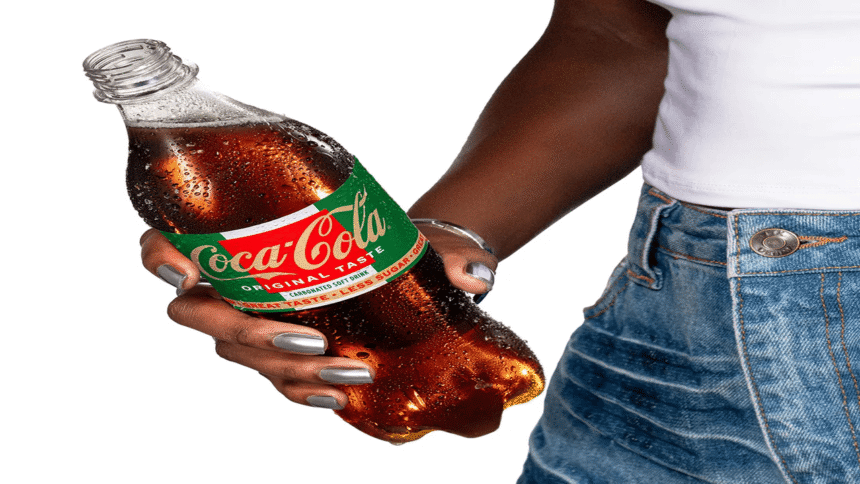
The company also pointed to its economic footprint more broadly in thousands of direct jobs and hundreds of thousands of indirect livelihoods across manufacturing, logistics, packaging, retail, transportation and recycling, alongside cultural campaigns including Share a Coke, Coke Studio, Coke with Meals, Schweppes’ “Born Social,” and the anniversary celebration itself, which included a limited-edition 60cl PET bottle offering ten centilitres more than the standard pack. Independent reporting on the Apapa hub notes the Coca-Cola System has invested over $1.5 billion in Nigeria’s economy over the past decade. The anniversary messaging closed on a Nigerian Pidgin note – “E Don Tey, We Still Dey” – alongside a stated commitment to refreshing lives, empowering communities and building a sustainable future.
BrandiQ Critical Analysis
Coca-Cola, following the records, has done exceedingly well. However, corporate social responsibility reporting is, at its core, considered by some researchers, as a selective accounting exercise. They claim a company chooses which numerator to publish and which denominator to leave out. Coca-Cola’s 75th-anniversary document appears to be a well-executed example of the genre, and its most interesting feature is not what it states but what a reader has to go elsewhere to find.
Start with the plastic numbers, because that is where the scale mismatch is starkest. Nigeria generates an estimated 2.5 million metric tonnes of plastic waste annually, according to nationwide audit data compiled by Break Free From Plastic and the Global Alliance for Incinerator Alternatives (GAIA), with only a small fraction currently recycled. Coca-Cola’s new Apapa hub processes up to 13,000 metric tonnes of PET annually – roughly half of one percent of the country’s total plastic waste stream, and a smaller fraction still of the plastic bottle waste specifically attributable to Coca-Cola’s own packaging. The 13,000 Nigerians the company says have earned income through its various collection programmes is a genuinely meaningful number of livelihoods at the individual level, but it says nothing about what share of the plastic those same programmes’ parent company puts into circulation each year is actually being recovered. Without that second number, presented deliberately or not, the reader cannot judge whether the company’s recycling investment is closing the gap it creates or merely offsetting a fraction of it.
That gap is not incidental – it is documented by independent auditors specifically in Nigeria. A February 2026 nationwide brand audit conducted across eight Nigerian cities by Break Free From Plastic and GAIA, examining nearly 300,000 pieces of collected plastic waste, identified Coca-Cola and PepsiCo as the leading multinational contributors to Nigeria’s plastic pollution, alongside Nestlé and several local water producers. That finding sits inside a longer global pattern: Break Free From Plastic’s annual worldwide brand audit has named The Coca-Cola Company the single largest branded plastic polluter for six consecutive years running, based on volunteer-collected waste data across dozens of countries, including Nigeria. None of this means the company’s Nigerian recycling investments are insincere or without value to the collectors and aggregators they employ. It means the anniversary document is presenting the solution side of a ledger whose problem side is publicly documented, verifiable, and considerably larger than the number chosen to represent it.
The maternal health and youth figures deserve a different, more favourable read. Unlike plastic, where Coca-Cola is both cause and partial remedy, the Safe Birth Initiative’s 43,000 mothers and newborns and the Youth Empowered programme’s 70,000 participants are not offsetting a harm the company itself generates – they are closer to conventional corporate philanthropy, and the scale, while modest against Nigeria’s population of over 220 million, is not undermined by the same structural counter-argument that applies to the recycling figures. The distinction matters for how BrandiQ’s readers should evaluate CSR claims generally: a company reducing the impact of a problem it does not cause deserves to be judged only against that problem’s scale; a company offsetting a fraction of a problem it substantially causes deserves to be judged against both the offset and the original contribution.
The economic-footprint framing follows a familiar multinational playbook worth naming plainly. Citing $1.5 billion injected into Nigeria’s economy over a decade, alongside thousands of direct and hundreds of thousands of indirect jobs, is standard practice for any large employer marking a milestone anniversary, and the figures are plausible for an operation of NBC’s scale. But this framing, common across extractive and consumer-goods multinationals operating in African markets, tends to present gross economic contribution without netting out profit repatriation, import dependency for concentrate and packaging inputs, or the environmental externalities – plastic waste chief among them – that Nigerian communities and municipal budgets absorb rather than the company itself. BrandiQ’s readers assessing similar anniversary or CSR communications from other multinationals should apply the same test consistently: does the gross contribution figure account for what leaves the country as well as what arrives in it?
The BrandiQ Takeaway
For African brand strategists and sustainability communicators, this anniversary release is instructive less for what Coca-Cola did than for how it chose to say it. The most persuasive CSR documents present real, verifiable, positive numbers – and this one does – while relying on the reader’s unfamiliarity with the denominator to make those numbers feel proportionate to the underlying problem. That is not unique to Coca-Cola; it is close to industry standard practice for any multinational whose core product generates a durable environmental externality. The professional response is not cynicism about the genuine livelihoods these programmes create, but discipline in reporting: when a company cites a recycling or offset figure, ask what percentage of its own footprint that figure represents, and hold every subsequent claim from that same company, and its competitors, to that same disclosure standard.
Overall, Coca-Cola has done well in its 75 years of operation and should be recognised for it.