


Huawei has unveiled a non-folding smartphone built around an unusually wide 16:9.5 display, pairing an experimental form factor with a 7,000mAh battery. The bigger question for the brand is whether consumers will embrace a different shape – or simply prefer the familiarity of the smartphone they already know.
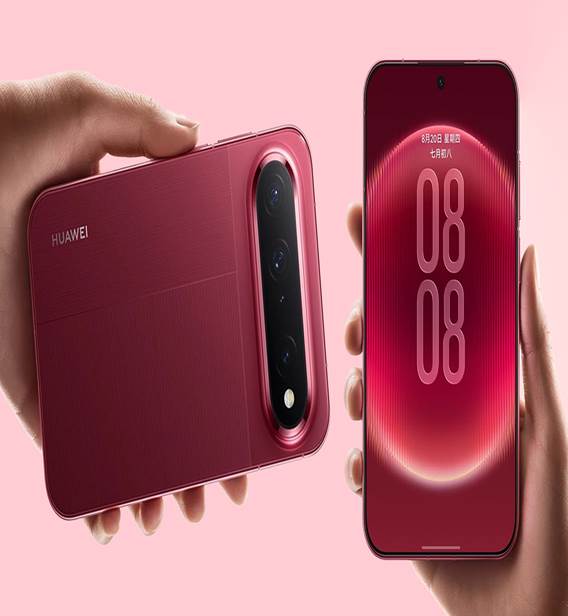
Huawei has officially unveiled the Pura X View, a smartphone that challenges one of the industry‘s most settled assumptions: that the modern phone should be tall and narrow. The device, unveiled in China on August 20, uses a 16:9.5 wide-screen format in a conventional, non-folding body, making it a significant departure from the 19.5:9 and 20:9 proportions that dominate contemporary smartphones. Multiple reports published following the unveiling confirm the device’s existence and its principal specifications, although Huawei has not yet released the complete technical specification, pricing or international availability.
The Pura X View is particularly interesting because Huawei is taking an idea previously associated with its foldable Pura X family and removing the hinge altogether. The result is a traditional smartphone designed to offer some of the visual advantages of a wider foldable screen without requiring consumers to buy a folding device. Android Authority describes it as Huawei’s answer to consumers who may want a wide-screen experience without the mechanical complexity of a foldable.
A screen designed around content
At the centre of the Pura X View is a 6.39-inch OLED display with a 2,232 × 1,320-pixel resolution and a 16:9.5 aspect ratio. Huawei is also claiming a 96.1% screen-to-body ratio, supported by bezels measuring approximately 1.05mm, while peak brightness is rated at 6,500 nits. The unusual proportions give the device a noticeably wider appearance than the conventional smartphone, with Huawei positioning the design around content consumption, including video, reading and gaming.
The engineering achievement is perhaps more striking when the screen is considered alongside the battery. Huawei has placed a 7,000mAh battery inside a body measuring only 6.68mm thick and weighing 201 grams. That combination is one of the strongest differentiators currently associated with the device. Huawei has not yet disclosed all charging specifications, however, so battery capacity should not automatically be interpreted as battery endurance until independent testing becomes available.
The phone is also reported to come with 12GB of RAM, with storage configurations reported at 256GB, 512GB and up to 1TB, alongside four colour options. The device is expected to run HarmonyOS 7.0. Huawei’s processor and full camera specifications, however, remain among the details that have not yet been fully disclosed.
That distinction is important. Some online reports have attributed specific camera sensors and a Kirin 9030s processor to the device, but these remain reported or leaked specifications rather than information that should presently be treated as Huawei-confirmed. For BrandiQ, the responsible position is therefore to separate what Huawei has revealed from what the technology ecosystem expects.
Huawei’s wider-screen experiment
The Pura X View does not appear from nowhere. Huawei has already been experimenting with wider displays through the Pura X, whose official specifications show a 6.3-inch internal display with a 16:10 ratio when unfolded. Huawei’s own product material positions that device around reading, video and gaming, demonstrating that the company has been exploring the idea of giving mobile users more horizontal screen real estate.
The Pura X View takes that experiment further by asking a provocative question: what if the wide screen did not need to fold at all? Instead of paying the engineering and financial cost of a hinge and flexible display, a consumer could obtain a wider viewing canvas in a conventional smartphone body. That could make the concept more accessible, although it also creates a different problem: consumers have spent years adapting their applications and habits to vertically oriented phones.
BrandiQ Analysis: Innovation is not the same thing as adoption
The Pura X View is a useful case study in the difference between technological novelty and consumer value. Huawei has solved an engineering problem – how to place a large battery and a wide display inside a relatively thin conventional handset. But the harder marketing problem is determining whether consumers actually want the resulting experience badly enough to change their established behaviour.
This is where Huawei’s product strategy becomes particularly interesting. A smartphone is not simply a piece of hardware. It is part of a behavioural ecosystem involving app developers, operating systems, content creators, social platforms and consumers. The dominant tall-screen format has become embedded in that ecosystem. Changing the shape of the screen therefore creates questions about how applications display, how video is consumed, how websites render, how games are optimised and how comfortable the device feels in one-handed use.
Huawei’s opportunity is that the wide screen could make certain activities genuinely better. Video, gaming, reading, productivity and multitasking could benefit from additional horizontal space. Android Authority notes that the display may appear smaller diagonally than a conventional 6.9-inch-tall display, precisely because screen measurements are taken diagonally, even though the wider format provides a different distribution of usable screen area.
That is a subtle but important branding lesson: a specification becomes a proposition only when the consumer understands what it does for them. “16:9.5” is an impressive technical statement, but it is not automatically a compelling consumer benefit. Huawei therefore needs to translate the specification into experiences that people can immediately understand: more of the movie, more of the game, more of the page, more of the work.
The strategic gamble
Huawei is also entering an increasingly interesting period in smartphone design. The industry spent years converging around the tall-screen smartphone, only for foldables to reopen the question of what a mobile device should look like. Huawei’s Pura X View suggests that the next stage may not necessarily be about making phones fold; it could be about making conventional phones wider.
That is a potentially important strategic distinction. Foldables have demonstrated that consumers are willing to reconsider the geometry of the smartphone, but their price, mechanical complexity and durability concerns can remain barriers. A wide conventional smartphone could offer a simpler proposition: change the screen, not the architecture.
The danger is that Huawei could be solving a problem consumer do not believe they have. Innovation becomes commercially meaningful only when it removes a genuine frustration, creates a meaningful new benefit or produces an experience sufficiently superior to existing alternatives to justify switching.
For Huawei, the Pura X View therefore represents more than another smartphone launch. It is a market experiment. The company is effectively testing whether the smartphone’s next evolutionary step should be taller, foldable, rollable – or simply wider.
The verdict
The Huawei Pura X View is real, officially unveiled and already attracting significant attention, but it is still too early to call it a new smartphone category. Huawei has confirmed the unusual wide-screen concept and several headline specifications, while important details – including final pricing, complete performance specifications and international availability – remain to be established. Pre-reservations are currently being reported in China, with the company expected to reveal more information around the August 28 sales date.
Its most important contribution may ultimately be conceptual rather than commercial. Huawei is challenging the assumption that the smartphone must continue to become narrower, taller or foldable. The Pura X View asks whether the future of mobile computing might instead be wider. Whether consumers answer “yes” will depend not on the novelty of its 16:9.5 display or the size of its battery, but on whether the device makes every day digital life sufficiently better to change a habit that the industry has spent more than a decade building.
For Huawei, the technology is the experiment. For the consumer, the experience will be the verdict.