

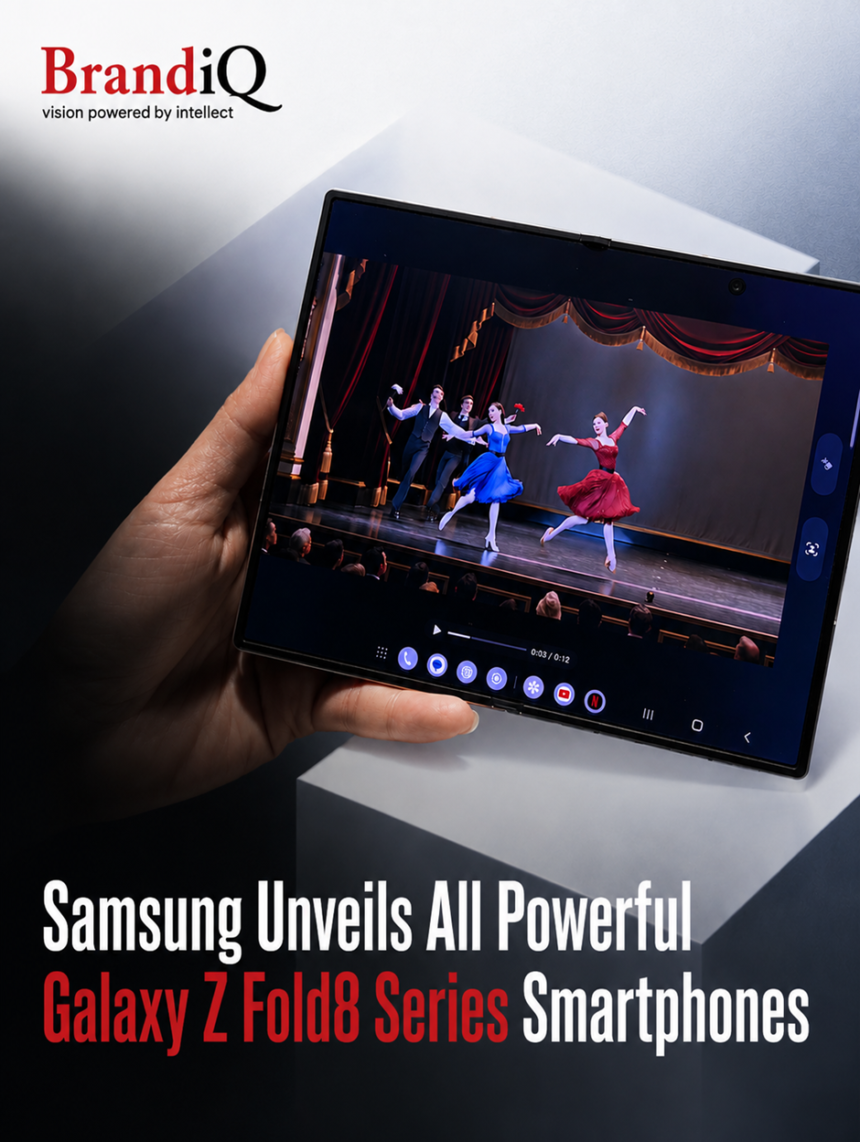

AI takes centre stage in the next era of smartphones as new foldable lineup signals Samsung’s shift from hardware innovation to intelligent, personalised computing powered by agentic artificial intelligence
Samsung Electronics has unveiled its next-generation foldable smartphone portfolio at Galaxy Unpacked 2026 in London, introducing three new devices that place artificial intelligence – not merely hardware – at the centre of the mobile experience. The new lineup comprises the Galaxy Z Fold8 Ultra, Galaxy Z Fold8 and Galaxy Z Flip8, reflecting Samsung’s ambition to redefine the smartphone as an intelligent digital companion capable of anticipating user needs, automating tasks and delivering personalised experiences.
While foldable smartphones have traditionally been marketed on the basis of engineering innovation and flexible displays, Samsung’s latest announcement demonstrates a notable strategic shift. The company is repositioning foldables as AI-first devices, integrating what it describes as “agentic AI” across the entire product ecosystem to support productivity, creativity and everyday decision-making.
The launch comes at a pivotal moment in the global smartphone industry as manufacturers increasingly compete on artificial intelligence capabilities rather than incremental hardware upgrades. Following the rapid rise of generative AI, smartphone makers are racing to transform handsets into intelligent personal assistants capable of understanding context, predicting behaviour and executing complex tasks with minimal user input.
Galaxy Z Fold8 Ultra introduces Samsung’s first foldable Ultra device
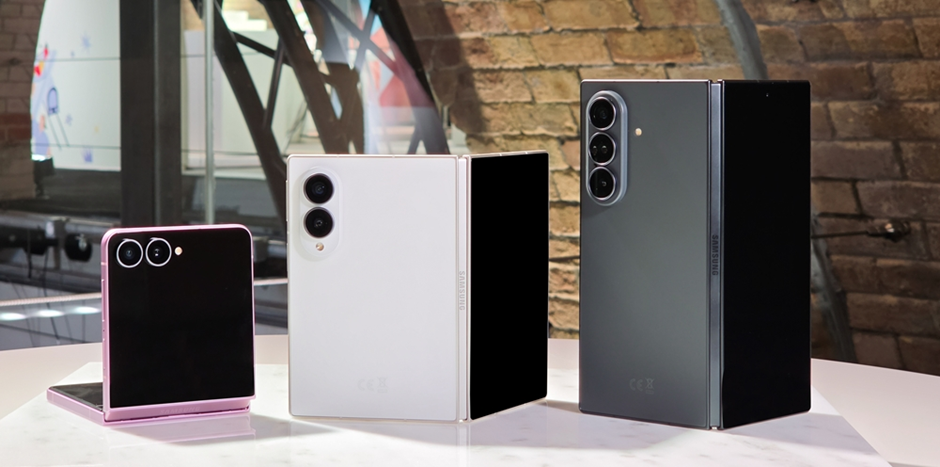
Leading the new portfolio is the Galaxy Z Fold8 Ultra, the first Ultra-branded model in Samsung’s foldable family. The device combines premium specifications with a larger foldable display, positioning it as the company’s flagship productivity smartphone.
Samsung says the Fold8 Ultra measures just 4.1 millimetres when unfolded and weighs 215 grams, making it the thinnest Galaxy Fold device introduced to date. The smartphone features an expansive 8-inch main display, enhanced hinge engineering and Samsung’s proprietary Flex Titanium technology designed to minimise display creasing while improving structural durability.
Beyond its physical design, the Fold8 Ultra introduces several AI-powered productivity features. Among them is Gemini Notebook, which enables users to upload meeting documents, PDFs or audio recordings and automatically generate summaries, presentation slides, podcasts, quizzes or AI-generated videos from the same source material.
Samsung has also introduced Now Nudge, an intelligent multitasking assistant capable of anticipating user behaviour. For example, the system can recognise travel or dinner plans shared through messaging applications and automatically suggest opening the calendar simultaneously in Multi Window mode, reducing the number of manual steps required to organise activities.
Powering these capabilities is Qualcomm’s Snapdragon 8 Elite Gen 5 for Galaxy processor alongside a 5,000mAh battery, providing the computing performance required for increasingly sophisticated on-device AI applications.
Galaxy Z Fold8 focuses on content and intelligent productivity
Samsung has redesigned the standard Galaxy Z Fold8 with an entirely new form factor aimed at improving content consumption and mobile productivity.
The device features a 5.5-inch cover display and a 7.6-inch foldable main screen, with aspect ratios optimised for different use cases. When unfolded, the display adopts a 4:3 ratio suitable for movies and gaming, while rotating the device provides a 3:4 layout designed for reading and document editing.
At 201 grams, Samsung says the Fold8 is the lightest Galaxy Fold smartphone yet produced. Artificial intelligence again takes centre stage. A new feature known as My FanCam enables users to automatically track a selected individual within recorded videos, reframing footage without manual editing. Samsung has also expanded its collaboration with Google’s Gemini AI to enable more advanced digital assistance.
In one demonstration, users simply share a photograph of the Eiffel Tower and instruct Gemini to locate a nearby hotel. The AI independently searches for accommodation matching specified preferences while allowing users to continue working in other applications before requesting final confirmation.
The capability represents Samsung’s continued evolution towards agentic AI systems that perform multi-step tasks rather than merely responding to individual prompts.
Galaxy Z Flip8 brings AI to the external display. Samsung has also refreshed its compact foldable with the launch of the Galaxy Z Flip8, emphasising portability, durability and external AI interaction. Measuring 6.1 millimetres when unfolded and weighing 180 grams, the Flip8 introduces a stronger hinge and reinforced frame while retaining its pocket-friendly design.
The most significant enhancement comes through its redesigned FlexWindow, which now functions as more than a notification screen. Users can access Now Brief, Samsung’s AI-powered daily information hub, providing personalised updates including weather, appointments, exchange rates, stock information and notifications without opening the device.
The external display also supports expanded application functionality, allowing users to browse photographs, respond to messages and complete common tasks directly from the cover screen.
Samsung has equally enhanced the Flip8’s camera system with creator-focused features including Camcorder Grip, Super Steady image stabilisation and Dual Recording, enabling simultaneous recording of both the content creator and subject – features designed to appeal particularly to social media creators and short-form video producers.
AI becomes Samsung’s primary competitive advantage
The Galaxy Z Fold8 series demonstrates Samsung’s increasing emphasis on integrating artificial intelligence into the core smartphone experience rather than treating AI as an additional feature.
Across the three devices, AI capabilities now extend beyond photography and voice assistance into productivity, scheduling, content creation, search, multitasking and autonomous task execution. The strategy reflects broader industry trends as smartphone manufacturers seek to differentiate premium devices through software intelligence rather than hardware specifications alone.
The BrandiQ Perspective
Samsung’s latest Galaxy launch is not fundamentally about foldable smartphones. It is about the future of human-computer interaction. For nearly two decades, smartphone manufacturers competed on cameras, processors, battery life and display quality. Those features are rapidly becoming commodities. The next competitive battleground is intelligence.
Samsung understands this shift. The company’s 2026 product strategy suggests that smartphones are evolving from communication devices into AI operating systems for everyday life. Rather than asking users to navigate applications, future smartphones will increasingly understand intent, anticipate needs and execute tasks autonomously.
This transition has profound implications for technology companies, software developers, marketers and regulators alike.
BrandiQ Analysis
Samsung is moving from hardware leadership to AI leadership
For years Samsung differentiated itself through engineering excellence. The Fold8 family indicates that software intelligence is now becoming equally important. The future smartphone will compete on cognitive capability as much as processing power.
Agentic AI represents the next phase of mobile computing. Unlike traditional virtual assistants that respond to commands, agentic AI performs sequences of actions independently while requiring minimal human intervention. Samsung’s demonstrations illustrate how smartphones may increasingly function as digital agents capable of managing schedules, bookings, content creation and productivity.
Foldables are evolving into productivity platforms. Samsung is repositioning foldable smartphones beyond premium lifestyle devices. Larger displays combined with AI-powered multitasking create a compelling proposition for professionals, entrepreneurs, executives and creators seeking laptop-like productivity in a mobile form factor.
The creator economy continues shaping product development. Several features – including My FanCam, Dual Recording and FlexWindow enhancements – have been designed specifically for content creators. This reflects the growing commercial influence of the creator economy, which now shapes hardware innovation as much as traditional consumer demand.
AI governance will become increasingly important
Samsung’s vision of highly autonomous smartphones also raises significant governance questions. As devices begin making recommendations, organising information and executing actions on behalf of users, issues surrounding transparency, privacy, accountability and user consent become increasingly important. The evolution towards agentic AI reinforces the need for robust AI governance frameworks that ensure intelligent systems remain trustworthy, explainable and aligned with user interests.
What African Businesses Should Watch
For African enterprises, Samsung’s strategy signals that AI-powered mobile devices will soon become primary platforms for business productivity, digital commerce, financial services and customer engagement.
Businesses that optimise products and services for intelligent mobile assistants – not merely smartphone applications – will likely enjoy a competitive advantage as AI becomes embedded within everyday consumer behaviour.
The announcement also presents an opportunity for policymakers and regulators across Africa to begin considering governance frameworks for increasingly autonomous consumer AI systems before widespread adoption accelerates.
BrandiQ Verdict
Samsung’s Galaxy Z Fold8 series marks an important milestone in the evolution of the smartphone industry. While thinner designs, lighter devices and improved displays remain impressive engineering achievements, the company’s real innovation lies in repositioning artificial intelligence as the central operating layer of mobile computing. The future of smartphones will no longer be defined solely by the quality of their hardware, but by the intelligence with which they understand, anticipate and assist their users. For the technology industry, the message is unmistakable: the race is no longer to build smarter phones – it is to build phones that think more intelligently alongside the people who use them.