


A Continental Shift in Investment Sentiment
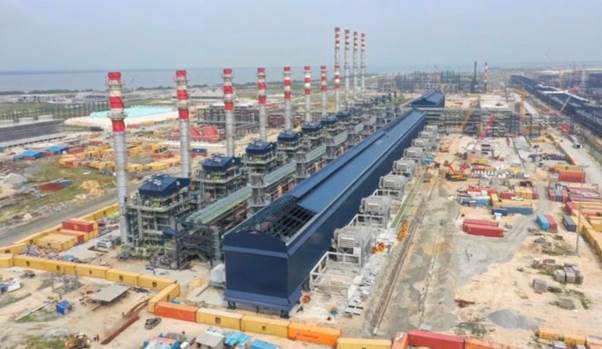
A high-level visit by South African institutional investors to the Dangote Petroleum Refinery and Petrochemicals complex in Nigeria signals growing confidence in large-scale African industrial assets.
Representatives from major financial institutions, including pension and investment bodies, have expressed interest in potential investment participation in what is widely regarded as one of Africa’s most ambitious infrastructure projects.
The engagement reflects a broader shift: African capital is increasingly looking inward to fund African industrialisation.
The Dangote Refinery as an Industrial Benchmark
The Dangote Group refinery complex in Ibeju-Lekki represents more than a single infrastructure project. It is being positioned as a proof-of-concept for African-led industrial capability at global scale.
During the visit, South African institutional representatives described the refinery as evidence that Africa can execute transformational infrastructure projects comparable to any global benchmark. The facility is now being interpreted not just as a Nigerian asset, but as a continental industrial landmark.
Institutional Capital and the Rise of African Investment Confidence
The delegation included representatives from major South African institutions such as pension and asset management funds. Their interest highlights a significant evolution in African capital flows.
These institutions collectively manage large-scale retirement and sovereign-linked capital pools, increasingly seeking:
- Long-term infrastructure returns
- Inflation-hedged industrial assets
- Energy sector exposure within Africa
- Strategic participation in continental value chains
The refinery’s scale and output potential make it a strong candidate for patient capital investment strategies.
Industrialisation Narrative: Africa Investing in Africa
A key theme emerging from the engagement is narrative transformation. Leaders from visiting institutions emphasised that projects like the Dangote refinery are reshaping perceptions of African industrial capacity.
The sentiment reflects a broader ideological shift: Africa is moving from being primarily a consumer of imported refined products to a potential producer and exporter within its own energy ecosystem.
This is particularly significant given the continent’s long-standing dependence on imported petroleum products despite abundant crude reserves.
Dangote’s Strategy: Scaling Energy Production for Continental Demand
According to statements from Dangote Group leadership, the refinery is designed to meet both domestic and regional demand for refined products including aviation fuel, polypropylene, and other petrochemical outputs.
The strategy is anchored on three core drivers:
- Rising energy demand across African economies
- Import substitution across petroleum supply chains
- Expansion into regional export markets
The group has also indicated plans for a public listing, aimed at broadening ownership and enabling African investors to participate directly in industrial growth.
Why This Matters for African Capital Markets
The interest from South African institutional investors signals a broader shift in African capital markets toward intra-continental investment flows.
Key implications include:
- Increased confidence in large-scale African infrastructure
- Growing alignment between pension capital and industrial projects
- Expansion of cross-border investment partnerships
- Strengthening of Africa’s internal capital recycling systems
This represents a structural shift away from external dependency toward regional capital mobilisation.
Conclusion: A Defining Moment for African Industrial Integration
The engagement between South African institutional investors and the **Dangote Group refinery project highlights a turning point in Africa’s investment landscape.
Beyond energy production, the refinery represents a broader industrial ambition: to prove that Africa can finance, build, and scale world-class infrastructure using its own capital and expertise.
As institutional investors increasingly explore opportunities within the continent, projects like this may define the next phase of African economic integration – where capital, industry, and consumption are increasingly interconnected within regional systems rather than global dependencies.