


Strategic Capital Beyond Aid
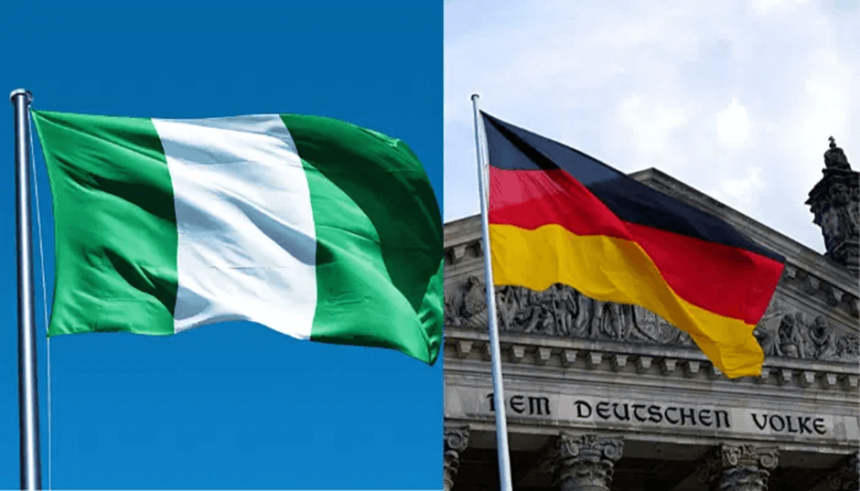
Nigeria’s newly signed €365m investment and development partnership with Germany is far more than a conventional bilateral agreement. It represents a strategic economic repositioning that reflects how Europe increasingly sees Nigeria not merely as an aid-dependent African state, but as a future industrial, energy and digital hub capable of shaping continental economic outcomes.
The agreement arrives at a sensitive moment in global economic history. Europe is searching for alternative industrial and energy partnerships outside unstable geopolitical corridors. Africa, meanwhile, is trying to move from commodity dependency toward value-added industrialisation. Nigeria sits at the intersection of those ambitions.
The inclusion of a €300m Export Credit Guarantee financing framework is especially significant because it signals that German policymakers are now prioritising investment mobilisation over traditional development assistance. This distinction matters. Aid sustains economies temporarily. Investment restructures them permanently.
For Nigeria, the partnership offers both economic opportunity and geopolitical validation. Germany’s willingness to deepen exposure to Nigeria despite current macroeconomic volatility indicates growing confidence in ongoing reforms around foreign exchange liberalisation, taxation and energy restructuring.
Why German Firms Are Looking at Nigeria Again
The mention of companies such as Siemens, SAP, Bayer and STIHL is not accidental. These firms represent four sectors critical to Nigeria’s next economic phase: power infrastructure, digital transformation, industrial agriculture and mechanised production.
For years, multinational corporations viewed Nigeria largely through the lenses of insecurity, policy uncertainty and currency instability. But recent reforms, painful as they may be socially, are slowly changing investor calculations.
The foreign exchange reforms under the Tinubu administration have reduced distortions that previously made capital repatriation difficult. Investors may dislike currency volatility, but they dislike opacity even more. Transparent instability is often preferable to artificial stability.
Germany’s renewed interest also reflects a wider European strategic anxiety. The continent is increasingly concerned about supply chain diversification, food security and energy transition vulnerabilities following disruptions caused by the Russia-Ukraine conflict and broader global fragmentation.
Nigeria offers scale. With over 220 million people, expanding urbanisation and a youthful demographic structure, the country represents one of the few large future consumer markets available globally.
Implications for Nigeria’s Power and Industrial Future
Perhaps the most transformative element of the partnership lies in energy cooperation, particularly Germany’s continued support for the Presidential Power Initiative involving Siemens.
Electricity remains Nigeria’s single greatest developmental bottleneck. Manufacturing productivity, digital economy growth, SME competitiveness and foreign investment attraction all depend on stable power.
Germany’s commitment to supporting Nigeria’s electricity expansion to 25 gigawatts could fundamentally alter the country’s industrial capacity over the next decade if implementation succeeds.
For investors, this is critical.
Reliable electricity changes the economics of manufacturing. It reduces operating costs, improves supply chain efficiency and enhances export competitiveness. Nigeria’s industrial underperformance has long been tied to the hidden tax imposed by self-generated power.
If Nigeria achieves even partial success in grid expansion, sectors such as cement, FMCG manufacturing, agro-processing, pharmaceuticals and digital services could witness substantial growth acceleration.
That explains why European industrial firms are moving early.
Agricultural Transformation and Food Security
Another underreported dimension of the agreement is agriculture.
Germany disclosed that approximately 600,000 smallholder farming households have already benefited from joint programmes that reportedly improved productivity by as much as 90 per cent.
This matters beyond food production.
Africa’s next economic frontier may not be oil or mining alone, but agricultural industrialisation. The continent possesses roughly 60 per cent of the world’s uncultivated arable land, yet remains heavily dependent on imported food. Nigeria alone spends billions annually on food imports despite enormous agricultural potential.
German involvement in mechanisation, processing technology and agricultural value chains could help Nigeria transition from subsistence farming to commercial agro-industrial production. This has implications for inflation management as well. Persistent food inflation remains one of Nigeria’s biggest macroeconomic risks. Improving agricultural productivity is therefore not only a food policy issue but also a monetary stability strategy.
What This Means for African Economic Integration
The agreement also aligns with the broader ambitions of the African Continental Free Trade Area.
Europe increasingly understands that future African competitiveness will depend on regional value chains rather than isolated national markets.
If Nigeria becomes a stronger industrial and energy hub, neighbouring African economies could integrate into its supply chains in manufacturing, logistics, digital services and agricultural processing.
German policymakers appear to recognise this.
By supporting Nigeria’s infrastructure and productive sectors, Germany is indirectly positioning itself within Africa’s emerging continental trade architecture.
This could intensify competition among global powers for strategic African partnerships. China has dominated African infrastructure financing for two decades. Europe is now trying to re-enter the continent through more collaborative investment frameworks rather than purely extractive relationships.
Implications for the UK and US
The agreement should also attract attention in both the United Kingdom and the United States.
For British firms, Nigeria remains one of the most commercially important African markets outside South Africa. Germany’s deeper economic positioning could intensify competition for influence in sectors such as fintech, clean energy, industrial manufacturing and logistics.
American investors should equally pay attention because Nigeria’s reform trajectory could reshape capital flows into Africa.
US firms have historically approached Nigeria cautiously due to regulatory unpredictability. But as European institutions deepen long-term commitments, American private equity and infrastructure funds may feel increasing pressure not to lose strategic ground in Africa’s largest economy.
The digital economy dimension is especially important. Germany’s interest in SAP-led digital transformation suggests Nigeria’s next growth phase may increasingly revolve around enterprise technology, digital infrastructure and data systems.
That aligns with broader global trends around AI-enabled industrial development.
Risks and Structural Realities
Yet optimism must be balanced with realism.
Nigeria’s historical challenge has never been attracting agreements. It has been implementation.
The country suffers from chronic institutional fragmentation, regulatory inconsistency and infrastructure deficits that often undermine large-scale economic partnerships.
Corruption risks, bureaucratic inefficiencies and policy reversals remain serious investor concerns.
The success of this partnership will therefore depend on governance quality as much as financing availability. There is also the risk of overdependence on external capital without sufficient domestic productive capacity. Sustainable development requires Nigeria to build internal institutional strength alongside foreign partnerships.
Another important issue is debt sustainability. Although the agreement is framed around development cooperation and investment guarantees, Nigeria must avoid sliding deeper into externally financed growth without corresponding export expansion and productivity gains.
BrandiQ Takeaways
Nigeria’s €365m partnership with Germany represents more than diplomatic symbolism. It reflects a changing global perception of Nigeria as a strategic economic frontier rather than merely a crisis-prone oil economy.
The agreement signals three major realities.
First, global investors are beginning to separate Nigeria’s long-term structural potential from its short-term macroeconomic instability.
Second, Africa is becoming central to future industrial, energy and food security calculations among advanced economies.
Third, the next phase of economic competition in Africa will increasingly revolve around infrastructure, energy transition, digital systems and manufacturing value chains.
For Nigerian policymakers, the challenge is no longer merely attracting foreign interest. It is converting that interest into measurable productivity, jobs, industrial competitiveness and institutional credibility. For investors globally, Germany’s move may represent an early indicator of a larger strategic shift toward Africa’s largest economy.