

The launch of applications for the Nando’s Hot Young Designer 2026 marks more than another seasonal call for entries. Now in its sixth edition, the initiative has evolved into a strategic design accelerator that positions emerging South African creatives within a much larger commercial and cultural ecosystem spanning Africa and the global design market.
While rooted in South Africa’s creative economy, the programme’s expanding influence reflects a deeper shift: design talent competitions are no longer just discovery platforms. They are becoming structured pipelines that convert raw creative ability into globally competitive design businesses.
From Local Competition to Design Economy Accelerator
Since its launch in 2016, the Nando’s Hot Young Designer programme has steadily repositioned itself from a brand-led initiative into a business-to-business design accelerator. Its model combines competition, mentorship, and commercial exposure, allowing emerging designers to move beyond portfolio development into market readiness.
What makes this particularly significant for South Africa is its alignment with a broader creative economy challenge: many talented designers lack access to production networks, manufacturing support, and international visibility. The programme directly addresses this gap by integrating design development with real-world commercial application.
The 2026 Brief: Designing for Global Restaurant Spaces
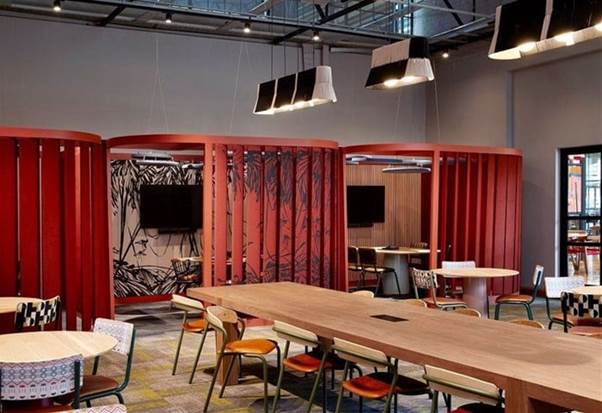
For the 2026 edition, designers are tasked with creating a sculptural linear lighting concept intended for installation across Nando’s restaurants worldwide. This brief is not merely aesthetic; it is deeply functional and globally scalable.
Participants are required to consider:
- Material innovation and texture exploration
- Transportability and installation efficiency
- Durability within commercial restaurant environments
- Collaboration with local artisans for handcrafted elements
By embedding global usability into the design brief, the competition ensures that winning concepts are not confined to conceptual galleries but are engineered for international deployment. This is where the programme transcends a traditional design contest and becomes a gateway into global product design systems.
Why This Matters for the African Design Market
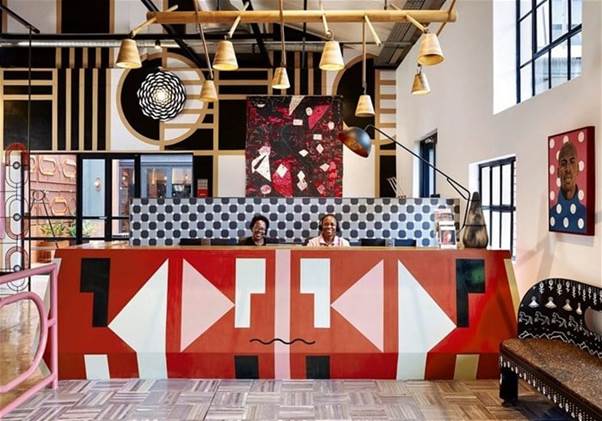
The significance of the Nando’s Hot Young Designer 2026 extends far beyond South Africa’s borders. It reflects a growing recognition of Africa not only as a source of cultural inspiration but as a viable production and innovation hub.
The programme actively contributes to:
- Strengthening Africa’s position in global design supply chains
- Creating commercially viable creative enterprises
- Promoting collaboration between designers and local manufacturing artisans
- Reducing dependency on external validation by building export-ready talent
In practical terms, it transforms design from a locally celebrated art form into a globally traded intellectual and commercial asset.
Mentorship, Market Access and the Business of Design
A defining feature of the accelerator is its structured post-competition support. Finalists do not simply win recognition; they gain access to mentorship, business development support, and commercial networks facilitated by industry experts.
Creative director Tracy Lynch of Clout/SA describes the platform as a “bridge” between South African designers and global markets, reinforcing its role as a design economy enabler rather than a branding exercise.
Past winners, including designer Thabisa Mjo of Mash T. Design, have credited the programme with reshaping their professional trajectories and opening doors to both local and international opportunities.
This reinforces a critical insight: in the global creative economy, visibility alone is not enough. Sustainable success requires structured pathways into production, distribution, and commercial scaling.
Africa’s Growing Influence in Global Design Narratives
The evolution of initiatives like the Nando’s Hot Young Designer 2026 reflects a wider transformation in how African creativity is perceived globally.
Where African design was once viewed primarily through an artisanal or cultural lens, it is increasingly being recognised for:
- Innovation in form and material usage
- Sustainable and handcrafted production methods
- Strong narrative and cultural depth
- Adaptability to global commercial environments
This shift positions African designers not as peripheral contributors but as central players in global design conversations.
Conclusion: A Pipeline Into the Future of Global Design
As applications open for the 2026 edition, the Nando’s Hot Young Designer 2026 continues to demonstrate how targeted creative interventions can reshape entire sectors.
It is no longer simply a competition for emerging designers. It is a structured pipeline that connects South African creativity to African industrial capability and ultimately to global commercial markets.
In an increasingly interconnected design economy, platforms like this are not just showcasing talent; they are actively manufacturing the next generation of globally relevant design businesses emerging from Africa.