

Aliko Dangote’s latest refinery ambition may prove to be one of the most consequential industrial announcements in Africa’s modern economic history. The Nigerian billionaire industrialist has unveiled plans to build another 650,000 barrels-per-day refinery in East Africa, signalling a bold attempt to replicate the scale of the Lagos-based Dangote Refinery and extend his influence across the continent’s fuel value chain.
If executed, the proposed refinery would not merely be another corporate investment. It could alter Africa’s energy map, reduce dependence on imported petroleum products, deepen regional trade integration, and accelerate a long-delayed industrial transformation.
For business leaders, policymakers, investors and energy strategists, the announcement deserves close attention.
A Continental Refining Vision Moves East
Speaking at the Africa We Build Summit in Nairobi, organised by Africa Finance Corporation, Dangote said his group is prepared to construct an identical version of the Nigerian refinery in East Africa if governments in the region provide the necessary policy and institutional support.
That statement is significant for three reasons.
First, it confirms that the Lagos refinery was never intended as a one-off project. It is becoming a scalable industrial template.
Second, it suggests Dangote sees East Africa as the next frontier for strategic infrastructure investment.
Third, it reflects a growing recognition that Africa’s energy vulnerability cannot be solved country by country. It requires regional assets with continental impact.
The proposal comes as Kenya, Uganda and Tanzania intensify discussions around a joint refining hub in Tanga, Tanzania, with potential crude supplies from Uganda, South Sudan, Kenya and the Democratic Republic of Congo.
In effect, East Africa is searching for what West Africa has begun to build: local refining capacity capable of replacing imports.
Why East Africa Matters Now
East Africa is one of the fastest-growing economic regions on the continent, with expanding populations, rising urbanisation, and increasing energy demand. Yet much of the region still depends heavily on imported refined fuel.
Industry estimates indicate that roughly three quarters of refined petroleum products consumed in East and Southern Africa are imported, largely from the Middle East and other global suppliers.
This creates structural problems:
- Exposure to global price shocks
- Shipping and freight cost inflation
- Currency pressure from dollar-denominated imports
- Supply disruptions during geopolitical crises
- Weak local industrial linkages
Recent tensions in global energy markets have reminded African governments that importing strategic fuel needs is not sustainable.
Dangote’s East Africa proposal arrives precisely at the moment when many governments are rethinking energy sovereignty.
The Lagos Model Becomes Exportable
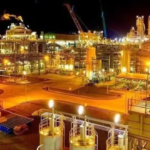
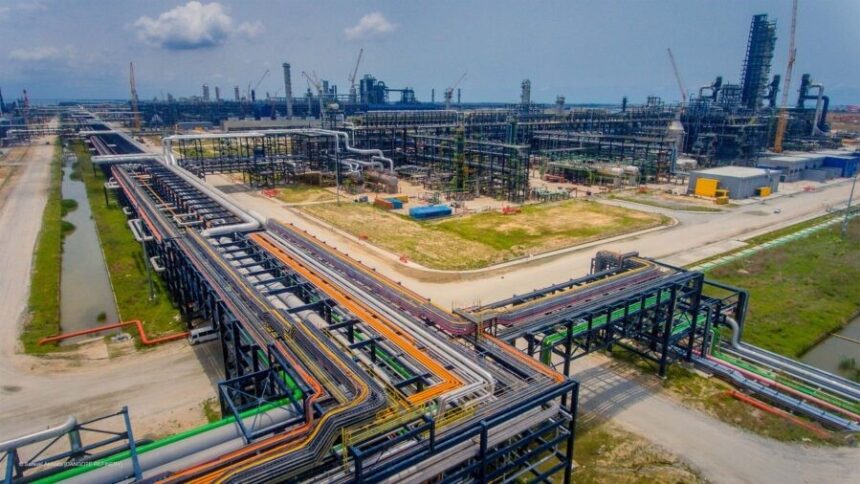
The Dangote Refinery in Lagos, with installed capacity of 650,000 barrels per day, is already one of the largest single-train refineries in the world and Africa’s largest refining complex.
Its strategic importance lies in what it represents:
- Substitution of fuel imports
- Strengthening of domestic supply security
- Potential export earnings
- Development of petrochemical ecosystems
- Lower logistics costs over time
- New confidence in large-scale African industrial execution
For decades, many analysts assumed such mega projects could only be built in Asia, Europe or the Gulf. Dangote changed that narrative.
Now the company wants to replicate the model elsewhere.
That is not simply expansion. It is industrial franchising at continental scale.
Why This Could Transform Africa’s Fuel Economics
If East Africa secures a refinery of this size, the impact could be far-reaching.
1. Reduced Import Dependence
Refineries convert crude oil into usable fuels such as petrol, diesel, jet fuel and other products. Today many African countries export crude and import finished fuel, losing value in the process.
A regional refinery would keep more value within Africa.
2. Lower Supply Risk
Countries dependent on imported fuel are vulnerable to wars, sanctions, freight disruptions and currency volatility. Regional refining provides strategic buffers.
3. Better Trade Integration
A cross-border refinery linked by pipeline, port and road networks would strengthen the logic of the African Continental Free Trade Area.
4. Industrial Spillovers
Refineries often catalyse adjacent industries such as petrochemicals, packaging, plastics, fertiliser, transport and logistics.
5. Fiscal Gains
Reduced fuel import bills can improve current account balances and foreign exchange stability.
Dangote’s Bigger Strategic Play
Dangote also revealed expansion plans in Nigeria that could scale refining capacity to 1.4 million barrels per day, potentially making the facility among the largest globally.
That suggests the group is pursuing a broader strategy:
- Dominate African refining capacity
- Build integrated petrochemical leadership
- Expand fertiliser and industrial inputs
- Create cross-border infrastructure assets
- Position itself as Africa’s industrial champion
This is more than oil. It is about controlling critical nodes of African industrialisation.
Historically, companies such as Reliance in India, Saudi Aramco in Saudi Arabia, and major Asian conglomerates used scale infrastructure to reshape national economies. Dangote appears to be pursuing an African variant of that model.
Why Governments Matter
Dangote made clear that government backing is essential. That is realistic.
Refineries require:
- Stable fiscal regimes
- Land and permitting clarity
- Environmental approvals
- Port access
- Pipeline infrastructure
- Security guarantees
- Long-term policy consistency
- Currency and investment confidence
Without these, private capital hesitates.
Africa has often struggled not because opportunities were absent, but because execution ecosystems were weak.
If East African governments align around a common framework, the refinery becomes more bankable.
If politics fragments the project, momentum could stall.
Lessons from Nigeria’s Experience
The Lagos refinery journey was not easy. It faced delays, financing complexity, engineering scale risks and scepticism.
Yet the project moved from improbable to operational.
That offers three lessons for East Africa:
Scale Requires Patience
Mega projects are rarely linear. Delays do not necessarily mean failure.
Local Opposition Must Be Managed
Industrial transformation often attracts resistance from vested import interests.
Long-Term Vision Beats Short-Term Politics
Projects of this magnitude outlive electoral cycles. They need policy continuity.
Why Investors Should Watch Closely
For capital markets, an East African refinery creates multiple opportunity layers:
- Infrastructure financing
- Debt syndication
- Equity participation
- Logistics and transport investments
- Energy trading platforms
- Industrial Park development
- Construction and engineering contracts
- Downstream distribution networks
Dangote also suggested opening ownership of refinery assets to African investors with dollar-denominated dividends.
That is strategically smart.
It reframes industrial infrastructure as a pan-African wealth creation platform rather than a single-owner enterprise.
Risks That Cannot Be Ignored
Despite the optimism, substantial risks remain.
Feedstock Risk
A refinery needs reliable crude supply. Regional politics and pipeline security matter.
Regulatory Risk
Different countries often have conflicting taxes, standards and energy policies.
Currency Risk
Large infrastructure projects are usually financed in hard currency while revenues may be partly local.
Demand Risk
Fuel demand assumptions must remain strong over decades.
Energy Transition Risk
Global decarbonisation trends could eventually alter fossil fuel economics.
Yet in the medium term, Africa’s development stage means fuel demand is likely to remain substantial for transport, industry and aviation.
The Geopolitical Dimension
There is also a strategic geopolitical layer.
For decades, Africa has been largely a buyer in global energy markets rather than a price-shaping producer of finished products.
Large regional refineries can shift bargaining power.
Instead of merely exporting crude and importing petrol, African states can process domestically, trade regionally, and negotiate globally from a stronger base.
That changes the continent’s role in the energy order.
What This Means for Nigeria
Some may ask whether expansion abroad weakens Nigeria’s position. The opposite may be true.
If Dangote successfully becomes a continental refining player, Nigeria gains:
- Corporate prestige
- Investment influence
- Regional supply relevance
- Export linkages
- Stronger business diplomacy
- Demonstration power for Nigerian capital
Nigeria’s soft power increasingly comes not only from population and culture, but from scalable enterprise.
The Fertiliser Signal Matters Too
Dangote also announced plans for around 20 fertiliser blending plants across Africa by 2028.
This is highly strategic.
Energy security and food security are deeply connected. Fertiliser affects crop yields. Petrochemicals affect manufacturing. Fuel affects transport.
By investing across these systems, Dangote is building not isolated factories but industrial ecosystems.
Final Analysis: Africa’s Industrial Moment
The proposed 650,000bpd East Africa refinery is not guaranteed. Negotiations remain early. Financing will be complex. Politics may interfere.
But the announcement captures something bigger than one project.
Africa is slowly moving from a continent defined by extraction to one defined by processing, manufacturing and value addition.
That shift is overdue.
For years, the continent exported crude, imported fuel, exported raw crops, imported food products, exported minerals, imported finished goods.
The new logic is different:
Produce locally. Process locally. Own more value locally.
Dangote’s refinery vision embodies that transition.
If East Africa aligns policy with capital and execution, this project could become one of the defining industrial investments of the decade.
And if Africa replicates such models across energy, agriculture, technology and logistics, the continent may finally begin to capture the wealth long generated from its own resources. That is why this story matters far beyond oil. It is about whether Africa can industrialise on African terms.