

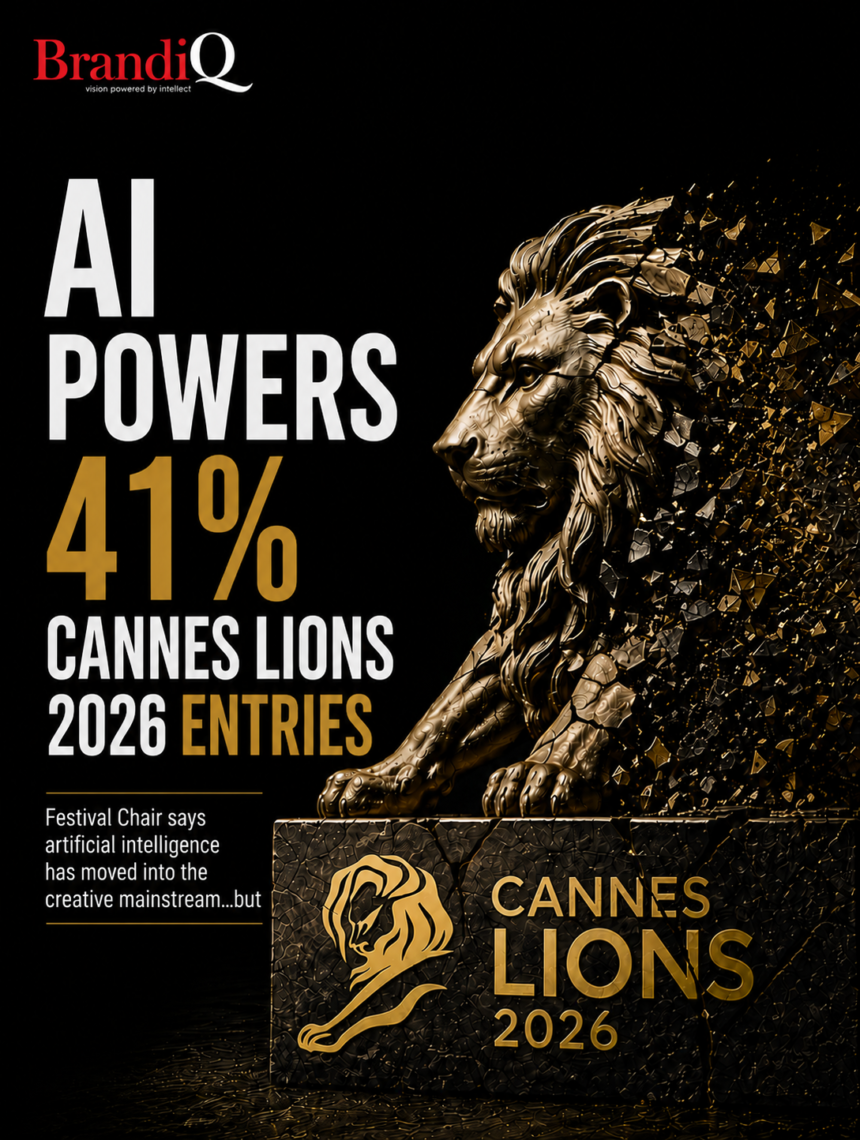
Festival Chair says artificial intelligence has moved into the creative mainstream, but human insight continues to determine award-winning ideas
Artificial intelligence has firmly established itself as one of the defining forces shaping global advertising, with approximately 40 per cent of entries submitted to the 2026 Cannes Lions International Festival of Creativity incorporating AI in some aspect of their development, according to the festival’s leadership.
The disclosure, made by Cannes Lions Chair Philip Thomas during the annual gathering of the global creative industry in Cannes, France, offers one of the clearest indications yet that artificial intelligence has moved beyond experimentation to become an integral component of modern marketing communications.
The figure reflects a remarkable shift in creative production within just a few years, as agencies, brands and production companies increasingly integrate generative AI, machine learning and intelligent automation into idea generation, content production, audience targeting, creative optimisation and campaign execution.
However, while AI’s presence has grown rapidly, festival organisers were quick to emphasise that technology alone does not win Lions. According to Thomas, creativity, originality, strategic insight and demonstrable business effectiveness remain the principal criteria upon which juries evaluate work.
The revelation comes amid continuing debate across the global communications industry about whether artificial intelligence represents a threat to creative professionals or an opportunity to enhance human imagination.
Throughout Cannes Lions 2026, AI emerged as one of the dominant themes across keynote presentations, panel discussions and executive conversations as agencies explored how the technology is reshaping every stage of the creative value chain – from research and planning to production, measurement and optimisation.
Industry leaders attending the festival generally agreed that AI is increasingly becoming a productivity tool rather than a replacement for creativity itself.
The technology is enabling agencies to analyse consumer data more rapidly, generate multiple creative executions in shorter timeframes and personalise campaigns at unprecedented scale. Yet speakers repeatedly stressed that successful campaigns continue to depend on strategic thinking, cultural understanding and emotionally compelling ideas – qualities that remain rooted in human creativity.
The discussion also reflects broader changes taking place across the global marketing communications industry, where clients are demanding faster turnaround times, greater efficiency and stronger return on investment without compromising originality or brand distinctiveness.
As AI capabilities continue to evolve, many agencies are investing heavily in training, governance frameworks and ethical guidelines to ensure responsible deployment of the technology while preserving creative integrity.
The increasing adoption of AI also featured prominently in conversations around regulation, copyright, intellectual property and professional ethics-issues that are expected to shape industry discussions well beyond this year’s festival.
For many industry observers, the 2026 edition of Cannes Lions may be remembered as the year artificial intelligence moved decisively from the margins of advertising into the mainstream of global creative practice.
BrandiQ Analysis
Cannes Lions Has Confirmed What Many Agencies Already Know: AI Is No Longer Optional
The significance of the “41 per cent” figure extends far beyond Cannes. It represents a structural shift in the global creative economy. Only three years ago, agencies debated whether AI would eventually influence advertising.
Today, the question has changed. The question is no longer whether agencies should use AI. The question is how intelligently they use it. This distinction is crucial. Many commentators have predicted that AI will replace copywriters, designers, planners and even creative directors.
Cannes Lions 2026 suggests something rather different. If nearly half of all entries incorporated AI, yet the winners continue to be selected primarily on the originality of their ideas, then the industry’s competitive advantage is moving away from technology itself and towards the quality of strategic thinking behind that technology.
Artificial intelligence is rapidly becoming democratised. Soon, almost every agency – large or small – will have access to similar AI tools. What they will not all possess is exceptional strategic thinking. That remains the real differentiator.
A Wake-Up Call for African Agencies
For Africa’s marketing communications industry, the announcement should be interpreted as both an opportunity and a warning. Many agencies across the continent continue to see AI primarily as a content-generation tool. Leading global agencies increasingly see it as a business transformation platform.
The difference is significant. AI can improve: Consumer insight generation, Campaign planning, Media optimisation, Audience segmentation, Creative production, Performance measurement, Brand monitoring, Reputation management. These capabilities have implications not only for advertising but also for public relations, media buying, research and integrated marketing communications.
Clients Will Soon Expect AI Capability
Perhaps the biggest implication lies with clients. As multinational brands become accustomed to AI-enabled agencies in Europe and North America, they will increasingly expect similar capabilities from agencies operating in Africa. This does not necessarily mean agencies must invest millions in proprietary technology. It does mean they must build organisational capability.
Clients will increasingly ask: “How does your agency use AI to improve business outcomes?” That question is likely to become as common as discussions about creativity, media planning or campaign effectiveness.
Human Creativity Is Becoming More Valuable – Not Less
Ironically, the widespread adoption of artificial intelligence may increase the value of genuinely original human thinking. When technology can produce thousands of advertisements within minutes, ideas that challenge convention, reshape culture and solve meaningful business problems become even more valuable.
That is perhaps the most important lesson emerging from Cannes Lions 2026. Artificial intelligence is becoming ordinary. Exceptional creativity is not. For agencies, marketers and communication professionals, the future therefore belongs not to those who merely use AI, but to those who combine technology with strategic insight, cultural intelligence and ideas capable of creating lasting business value.
The Cannes Lions message is becoming increasingly clear. The next generation of creative leaders will not compete against artificial intelligence. They will compete with others who know how to use it better.