


Tinubu administration signals major fiscal shift as debt concerns deepens
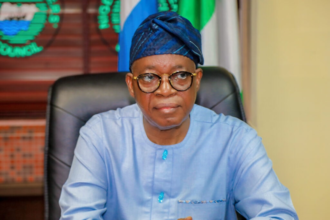
Nigeria’s Minister of Finance and Coordinating Minister of the Economy, Taiwo Oyedele, has delivered what may become one of the most defining economic policy statements of the Tinubu administration: Nigeria can no longer depend primarily on borrowing to finance development.
The declaration comes at a politically sensitive moment. Since assuming office, President Bola Ahmed Tinubu’s administration has faced growing public criticism over rising debt accumulation, increasing living costs, currency volatility and persistent fiscal pressures. Ironically, Oyedele’s statement emerged barely 24 hours after reports surfaced that the Federal Government was intensifying discussions with the World Bank over a fresh $1.25 billion loan facility.
Yet beyond the apparent contradiction lies a deeper economic reality confronting not only Nigeria, but many emerging economies across Africa: the age of debt-driven development is becoming increasingly unsustainable.
Nigeria’s Fiscal Crossroads
For decades, Nigeria’s development model has relied heavily on a fragile combination of crude oil revenues, external borrowing and deficit financing. Successive governments borrowed aggressively to fund infrastructure, stabilise budgets and finance recurrent expenditures during periods of revenue shortfalls.
However, rising global interest rates, currency depreciation, weak productivity growth and declining fiscal buffers are exposing the structural limits of that strategy. Nigeria’s debt profile has expanded significantly over the past decade. More concerning for economists is not merely the size of the debt, but the cost of servicing it.
At one point, debt servicing reportedly consumed more than 90 per cent of government revenue, leaving limited fiscal space for education, healthcare, infrastructure, security and social investments. Oyedele’s remarks therefore reflect a growing recognition within government that Nigeria faces a fiscal sustainability challenge rather than simply a borrowing problem.
“Nigeria cannot continue to finance development primarily through borrowing,” the minister stated while defending ongoing tax reforms aimed at broadening government revenue and improving fiscal efficiency.
Why This Matters Globally
International investors in the United States, United Kingdom, Europe and Asia are paying close attention because Nigeria represents one of Africa’s largest economic bellwethers.
With over 220 million people, vast natural resources and one of the continent’s largest consumer markets, Nigeria’s fiscal stability has direct implications for:
- African investment flows
- Emerging market debt markets
- Global energy security
- Consumer goods expansion
- Digital economy growth
- Infrastructure financing
- Regional trade integration
If Nigeria successfully transitions from debt dependency toward a more productive tax and investment-driven economy, it could strengthen investor confidence across Sub-Saharan Africa.
If it fails, the consequences could extend far beyond Nigeria’s borders.
Global investors understand that Africa’s long-term economic future depends heavily on whether its largest economies can achieve sustainable fiscal management without triggering debt distress, inflationary crises or political instability.
The Real Meaning Behind the Tax Reforms
Oyedele’s comments are fundamentally linked to the administration’s ongoing tax reform agenda. The government appears to be pursuing a strategic fiscal recalibration built around several core objectives:
Expanding Revenue Without Excessive Borrowing
Nigeria’s tax-to-GDP ratio remains among the lowest globally. The administration believes stronger domestic revenue mobilisation is essential for long-term sustainability.
Improving Investment Competitiveness
The proposed reduction in corporate income tax rates signals an attempt to attract foreign direct investment while simplifying compliance for businesses.
Formalising the Informal Economy
A major challenge for Nigeria remains the vast informal sector operating largely outside the tax system.
Reducing Multiple Taxation
Businesses across Nigeria have long complained about overlapping taxes and levies imposed by federal, state and local governments. Harmonisation efforts could significantly reduce operational inefficiencies.
Digitising Tax Administration
Technology-driven tax systems are expected to improve transparency, reduce leakages and strengthen compliance monitoring.
Implications for Nigerian Businesses
For Nigerian businesses, the reforms present both opportunities and risks.
In the short term, businesses may experience adjustment pressures as government intensifies efforts to widen the tax net and improve compliance systems.
However, if implemented effectively, the reforms could deliver long-term benefits including:
- Reduced tax complexity
- Improved investor confidence
- Lower compliance costs
- Better infrastructure financing
- More predictable regulatory systems
- Improved access to formal financing
The exemption of minimum wage earners from personal income tax may also help stimulate consumer spending at the lower end of the economy.
Yet the success of the reforms will depend heavily on one critical factor: public trust.
Many Nigerians remain sceptical because previous tax increases often failed to translate into visible public service improvements. Without stronger transparency and accountability, higher revenue mobilisation could face social resistance.
What African Governments Are Learning
Nigeria’s evolving fiscal strategy reflects a broader lesson spreading across Africa.
Several African countries that borrowed aggressively during periods of low global interest rates are now confronting mounting repayment pressures, weakened currencies and rising debt servicing obligations.
Countries such as Ghana, Zambia and Ethiopia have already faced severe debt restructuring challenges.
As a result, African governments are increasingly shifting focus toward:
- Domestic revenue mobilisation
- Tax system modernisation
- Public-private partnerships
- Export diversification /
- Industrialisation
- Digital economy expansion
Nigeria’s reform process could therefore become a test case for how large African economies navigate post-debt development models.
Why UK and US Investors Should Pay Attention
Western investors are particularly interested because Nigeria’s economic trajectory affects global corporate expansion strategies.
Major multinational companies in banking, telecoms, energy, consumer goods and fintech continue viewing Nigeria as one of Africa’s most important long-term growth markets.
A more stable and investment-friendly fiscal system could unlock opportunities across:
- Infrastructure investment
- Renewable energy
- Manufacturing
- Financial technology
- Agriculture
- Digital commerce
- Real estate
- logistics and transportation
Moreover, institutional investors are increasingly assessing governance quality, fiscal sustainability and tax administration efficiency before allocating capital to emerging markets.
Nigeria’s ability to strengthen fiscal credibility could therefore influence capital flows not only into Nigeria but across Africa.
The Political Economy Challenge
Despite the economic logic behind the reforms, the political challenge remains enormous.
Tax reform is rarely popular in developing economies where citizens often distrust public institutions and question how government revenues are spent. Vice President Kashim Shettima acknowledged this challenge directly, noting widespread scepticism surrounding the reforms. The administration now faces the difficult task of convincing Nigerians that increased taxation will translate into tangible improvements in infrastructure, healthcare, education and economic opportunity.
Without visible governance reforms, stronger institutions and credible accountability systems, public resistance could undermine implementation.
BrandiQ Takeaways
Taiwo Oyedele’s statement is more than a fiscal observation. It signals a possible ideological shift in Nigeria’s economic management philosophy.
The era when governments could endlessly borrow against future oil revenues is becoming increasingly untenable in a volatile global economy shaped by geopolitical instability, energy transition pressures and tightening international credit markets.
For Nigeria, the real challenge is no longer simply borrowing less. It is whether the country can build productive economic systems capable of generating sustainable wealth internally.
For investors, Nigeria’s fiscal reforms may represent either the beginning of a long-term economic stabilisation story or another difficult adjustment phase in Africa’s largest economy.
The outcome will shape not only Nigeria’s future, but also broader investor perceptions about Africa’s economic viability in the decades ahead.