

Nigeria and South Africa are moving to strengthen bilateral energy cooperation in what could become one of the most strategically important economic partnerships on the continent. Framed around energy security, industrial growth and cross border investment, the renewed engagement signals a broader shift in African economic diplomacy: the continent’s largest economies increasingly recognise that future competitiveness may depend less on isolated national strategies and more on coordinated regional power.
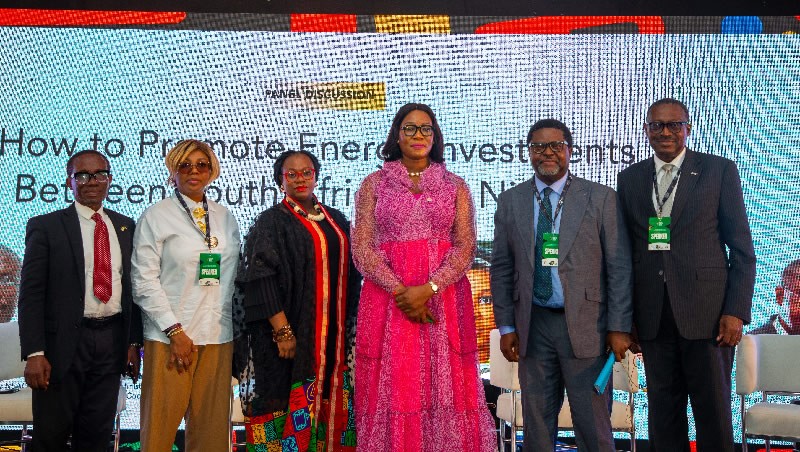
That message emerged strongly at the South Africa Energy Collaboration Breakfast Roundtable in Lagos, where South Africa’s Deputy Minister of International Relations and Cooperation, Thandi Moraka, urged deeper collaboration between both nations. Her intervention was not merely diplomatic language. It reflected a growing reality that Africa’s energy future will likely be shaped by how effectively Nigeria and South Africa align their strengths.
Nigeria brings hydrocarbons, refining potential, population scale and a fast-growing market. South Africa contributes industrial capacity, financial sophistication, infrastructure experience and a more mature energy investment ecosystem. Together, they represent an economic axis with the scale to influence continental supply chains, energy transition pathways and investor sentiment.
Why Nigeria and South Africa Matter to Africa’s Energy Future
For decades, Nigeria and South Africa have often been compared as continental rivals. One is Africa’s most populous country and major oil producer. The other is among Africa’s most industrialised economies and a gateway for institutional capital.
Yet rivalry is becoming less relevant than complementarity.
Africa faces an energy paradox. The continent is rich in natural resources but suffers chronic shortages in power generation, logistics bottlenecks, limited refining capacity, weak transmission systems and insufficient long-term financing. Many countries still rely heavily on imported refined fuel, costly diesel generation or underdeveloped renewable infrastructure.
No single African nation can solve these structural problems alone. But collaboration between Nigeria and South Africa could materially improve the continent’s capacity to address them.
Moraka’s remarks that energy diplomacy has become a core foreign policy tool were therefore significant. Reliable power supply, fuel security and infrastructure resilience now influence foreign direct investment decisions as much as tax incentives or labour costs.
Investors increasingly ask one basic question before committing capital: can the lights stay on?
Energy Diplomacy Is Becoming Economic Strategy
The concept of energy diplomacy is rising globally. Europe has learned it through gas shocks. Asia has learned it through supply chain vulnerability. Africa is now learning it through rising demand, geopolitical volatility and the race for industrial competitiveness.
South Africa’s outreach to Nigeria suggests that African states are beginning to use diplomacy not only for political alignment but for strategic resource coordination.
That can include:
- Joint investments in gas infrastructure
- Petroleum trade agreements
- Cross border logistics corridors
- Renewable technology partnerships
- Shared financing platforms
- Skills transfer and technical cooperation
- Harmonised regulation for energy commerce
This matters because fragmented regulation remains one of Africa’s biggest barriers to scale.
Nigeria’s Strategic Leverage: Gas, Oil and Refining Capacity
Nigeria remains central to any continental energy conversation because of three structural advantages. First, it holds some of Africa’s largest oil and gas reserves. Gas in particular may become increasingly important as a transition fuel for power generation, manufacturing and fertiliser production. Second, Nigeria’s market size offers domestic demand that can justify large infrastructure investments. Third, expanding refining capacity gives Nigeria a chance to shift from crude exporter to downstream value creator.
Moraka’s reference to Nigeria’s refinery advantage underscores a major geopolitical point: countries that refine at scale enjoy stronger insulation from global product shocks than those that merely export raw crude. For Africa, local refining can reduce shipping costs, ease import dependence and improve supply stability during crises in regions such as the Middle East.
South Africa’s Strategic Leverage: Capital, Systems and Industrial Capability
South Africa brings different but equally valuable assets. Its strengths include institutional finance, engineering capability, mining linked energy expertise, industrial demand centres and more developed corporate governance systems. It also hosts some of Africa’s largest banks, insurers and pension pools capable of supporting infrastructure finance.
This creates a natural complement to Nigeria.
Nigeria can provide energy abundance and growth demand. South Africa can help structure capital and industrial deployment. Such combinations often drive successful regional blocs elsewhere in the world.
AfCFTA Could Be the Missing Link
Moraka’s call to reduce trade barriers highlights another truth: the African Continental Free Trade Area may be most powerful not in consumer goods alone, but in strategic sectors like energy. Imagine a continent where fuel, gas equipment, solar components, batteries and technical services move more freely across borders. Project costs would fall. Market sizes would expand. Investors would gain confidence.
Yet tariffs are only part of the challenge. Non-tariff barriers such as customs delays, weak ports, inconsistent standards and poor transport links remain severe. That is why her call for better roads, rail and ports between Nigeria and South Africa should be taken seriously. Energy trade requires physical arteries, not just speeches.
The Logistics Problem Africa Must Solve
Africa’s energy challenge is not only about resources. It is also about movement. Pipelines are limited. Rail freight is uneven. Port congestion raises costs. Road transport can be slow and insecure. Transmission networks are underdeveloped. Equipment imports face delays.
Without logistics reform, even abundant resources remain commercially trapped. A Nigeria South Africa corridor of cooperation could catalyse broader infrastructure priorities:
- Port modernisation
- Specialised energy logistics hubs
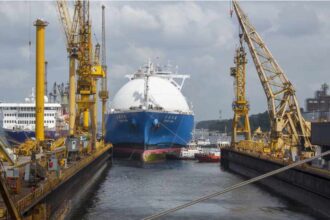
- LNG handling capacity
- Rail links for industrial freight
- Renewable equipment distribution chains
- Shared digital customs systems
These may sound technical, but they are foundational to competitiveness.
Why This Matters for Investors
Global investors are reassessing emerging markets through three lenses:
- Energy reliability
- Regulatory predictability
- Regional scale
A deeper Nigeria South Africa energy partnership could improve all three. It signals seriousness about market integration. It creates potential larger project pipelines. It reduces perceived fragmentation. And it offers the narrative of two anchor economies coordinating rather than competing. Narratives matter in capital markets.
The Role of Private Sector Champions
Government diplomacy alone will not deliver results. Real progress requires private sector execution.
This includes:
- Energy majors
- Refiners
- Utilities
- Renewable developers
- Infrastructure funds
- Banks
- Logistics operators
- Industrial consumers
If the public sector creates frameworks while private capital builds assets, the partnership can move from summit rhetoric to measurable output.
Risks and Constraints
Despite the promise, several risks remain.
Policy inconsistency can slow investor confidence. Currency volatility can distort project economics. Protectionist instincts may undermine open trade. Domestic politics in either country can distract strategic continuity. There is also the risk of symbolism without implementation, a recurring African challenge where declarations outpace delivery. For the partnership to matter, it must generate bankable projects, not just conference communiqués.
Why the Timing Is Important
The timing of this renewed push is notable.
Global energy markets remain sensitive to geopolitical conflict. Supply chains have been disrupted repeatedly in recent years. Many countries are rethinking resilience over pure efficiency. At the same time, Africa’s population growth is increasing power demand rapidly. This means delay carries costs. Countries that fail to secure energy systems may struggle with inflation, weak industrial output, unemployment and declining competitiveness. Those that build resilient systems could attract manufacturing migration and long-term capital. Nigeria and South Africa appear increasingly aware of this strategic window.
What It Means for Nigeria
For Nigeria, stronger ties with South Africa can support:
- Additional investment flows
- Industrial partnerships
- Technology transfer
- Larger markets for refined products and gas solutions
- Greater continental influence in energy policy
It also helps reposition Nigeria beyond crude dependence toward integrated energy leadership.
What It Means for South Africa
For South Africa, partnership with Nigeria offers:
- Access to large energy opportunities
- Diversified supply relationships
- Commercial entry into West African growth markets
- Expanded geopolitical relevance across the continent
It also supports its own transition from domestic constraints toward broader African opportunity.
The BrandiQ Strategic View
This story is bigger than diplomacy. It is about brand Africa. For too long, the continent has been marketed globally as fragmented, risky and underpowered. Strategic cooperation between Nigeria and South Africa offers a different narrative: scale, coordination and ambition. That narrative can attract investment as much as any policy reform.
Final Word
If Africa is to industrialise meaningfully, it must solve energy first. If it is to solve energy at scale, its largest economies must lead. That is why Nigeria and South Africa deepening ties matters. One has resources. One has systems. Both have scale. Together, they could help build a more secure continental energy market. Separately, they may continue to underperform their potential.